
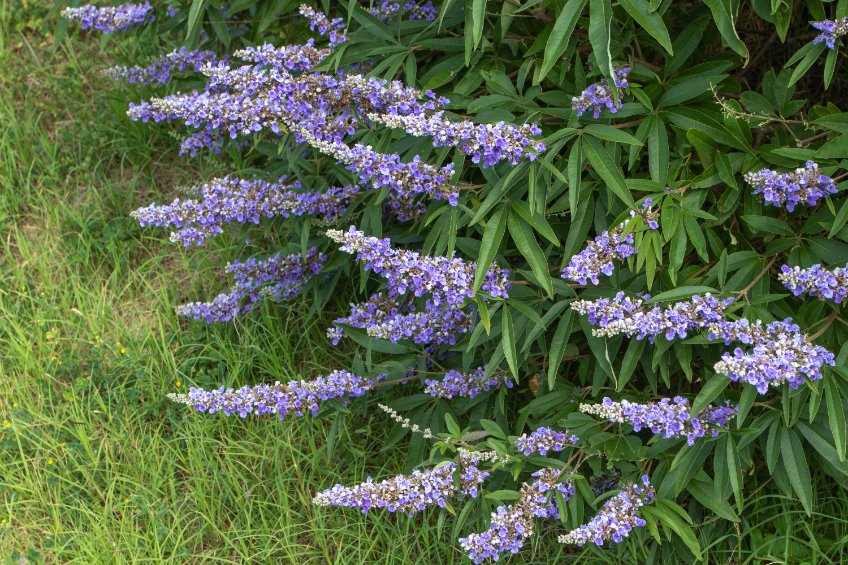
If you’ve driven through neighborhoods in the Dallas–Fort Worth metroplex during the summer and noticed a small tree covered in long purple blooms, there’s a good chance you were looking at a chaste tree. Also known as Vitex agnus-castus, the chaste tree has become one of the most popular ornamental trees in North Texas thanks to its drought tolerance, fast growth, and ability to thrive in extreme summer heat.
For homeowners looking for a low-maintenance tree that adds color and attracts pollinators, the chaste tree is often a strong choice.
Quick Answer: What Is a Chaste Tree?
A chaste tree (Vitex agnus-castus) is a flowering ornamental tree or large shrub known for its purple blooms, drought tolerance, and ability to attract pollinators like bees and butterflies. It grows especially well in North Texas because it handles heat, full sun, and dry conditions better than many other flowering trees.
Read our list of drought-tolerant trees for North Texas.
What Does a Chaste Tree Look Like?
Chaste trees are typically multi-trunk ornamental trees with soft gray-green foliage and tall flower spikes that bloom in shades of lavender, purple, blue, or occasionally white.
In North Texas landscapes, they usually grow:
- 10–20 feet tall
- 10–15 feet wide
- In a rounded or vase-like shape
The blooms appear from late spring through summer and can continue flowering well into early fall if conditions are favorable.
Because of their airy canopy and colorful blooms, chaste trees are commonly used as:
- Accent trees
- Patio trees
- Pollinator garden focal points
- Privacy screens
- Ornamental front-yard trees

Chaste Tree Quick Facts
| Feature | Details |
|---|---|
| Botanical Name | Vitex agnus-castus |
| Common Names | Chaste tree, Vitex, Monk’s pepper |
| Mature Height | 10–20 feet |
| Mature Width | 10–15 feet |
| Bloom Color | Purple, lavender, blue, white |
| Sun Requirements | Full sun |
| Water Needs | Low once established |
| Growth Rate | Fast |
| Best USDA Zones | 7–9 |
| Drought Tolerance | High |
| Pollinator Friendly | Yes |
| North Texas Friendly | Excellent |
Why Chaste Trees Grow Well in North Texas
One reason chaste trees are so popular throughout the DFW metroplex is that they handle the region’s climate exceptionally well.
North Texas presents several landscaping challenges:
- Long periods of summer heat
- Clay-heavy soils
- Periodic drought
- Water restrictions
- Sudden temperature swings
Many flowering trees struggle in these conditions. Chaste trees generally do not.
Once established, they require relatively little supplemental watering and continue blooming during the hottest parts of summer when many plants begin to fade.
They also tolerate poor soil conditions better than many ornamental species, provided drainage is decent.
Benefits of Planting a Chaste Tree
Beautiful Summer Blooms
One of the biggest advantages of chaste trees is their long bloom season. The purple flower spikes create vibrant color during summer when many landscapes start looking stressed from the heat.
Drought Tolerance
After the first growing season, chaste trees become highly drought tolerant and usually require minimal watering outside of extreme dry periods.
Pollinator Friendly
Bees, butterflies, and hummingbirds are strongly attracted to chaste tree blooms, making them a great addition to pollinator gardens.
Fast Growth
Compared to many ornamental trees, chaste trees grow relatively quickly and can establish themselves in just a few years.
Low Maintenance
They generally require less maintenance than many flowering ornamentals. Occasional pruning and seasonal cleanup are often enough to keep them looking attractive.
Potential Downsides of Chaste Trees
While chaste trees work well for many landscapes, they are not perfect for every yard.
Some potential drawbacks include:
- Flower drop and seed litter beneath the tree
- Occasional winter dieback during severe freezes
- Can become large if not pruned regularly
- May reseed in some environments
In most North Texas landscapes, these issues are relatively manageable.
How to Care for a Chaste Tree
Plant in Full Sun
Chaste trees perform best with at least 6–8 hours of direct sunlight daily. More sun generally means stronger blooming.
Water During Establishment
Newly planted trees should be watered deeply during their first growing season to encourage strong root development.
Prune in Late Winter
Most pruning should be done in late winter or early spring before new growth begins. Many homeowners lightly shape the tree annually to maintain structure.
Avoid Overwatering
Once established, chaste trees prefer drier conditions. Too much water can lead to root problems and reduced vigor.
Use Well-Drained Soil
Although adaptable, they perform best in soil that drains reasonably well.

Are Chaste Trees Messy?
Compared to some ornamental trees, chaste trees are considered moderately messy.
The flowers eventually fall, and mature trees may drop seeds later in the season. However, most homeowners consider the tradeoff worthwhile because of the tree’s long bloom period and visual appeal.
Strategic placement away from pools or heavily trafficked patios can help minimize cleanup.
Are Chaste Trees Good for Small Yards?
Yes — in many cases.
Because they stay smaller than shade trees like live oaks or pecans, chaste trees work well in:
- Smaller suburban yards
- Courtyard spaces
- Pool landscapes
- Decorative beds
- HOA neighborhoods with limited space
Their manageable size makes them especially popular in newer DFW-area subdivisions.
Common Chaste Tree Varieties
Some of the most common varieties include:
| Variety | Bloom Color | Notes |
|---|---|---|
| Shoal Creek | Deep purple | Most popular in Texas |
| Montrose Purple | Bright violet-purple | Heavy bloomer |
| Alba | White | Less common, elegant appearance |
| Blue Puffball | Blue-lavender | Compact growth habit |
Is a Chaste Tree Right for Your Yard?
If you want a colorful, drought-tolerant ornamental tree that thrives in the Dallas–Fort Worth climate, a chaste tree is often an excellent choice.
They provide:
- Long-lasting summer color
- Pollinator benefits
- Low water needs
- Fast growth
- Strong heat tolerance
For many North Texas homeowners, they offer an ideal balance between beauty and practicality.
Final Thoughts
The chaste tree has earned its popularity across North Texas landscapes for good reason. It handles heat, drought, and difficult conditions while still producing vibrant blooms throughout the summer.
Whether you’re upgrading a front yard, building a pollinator garden, or looking for a low-maintenance ornamental tree, the chaste tree is worth considering.